

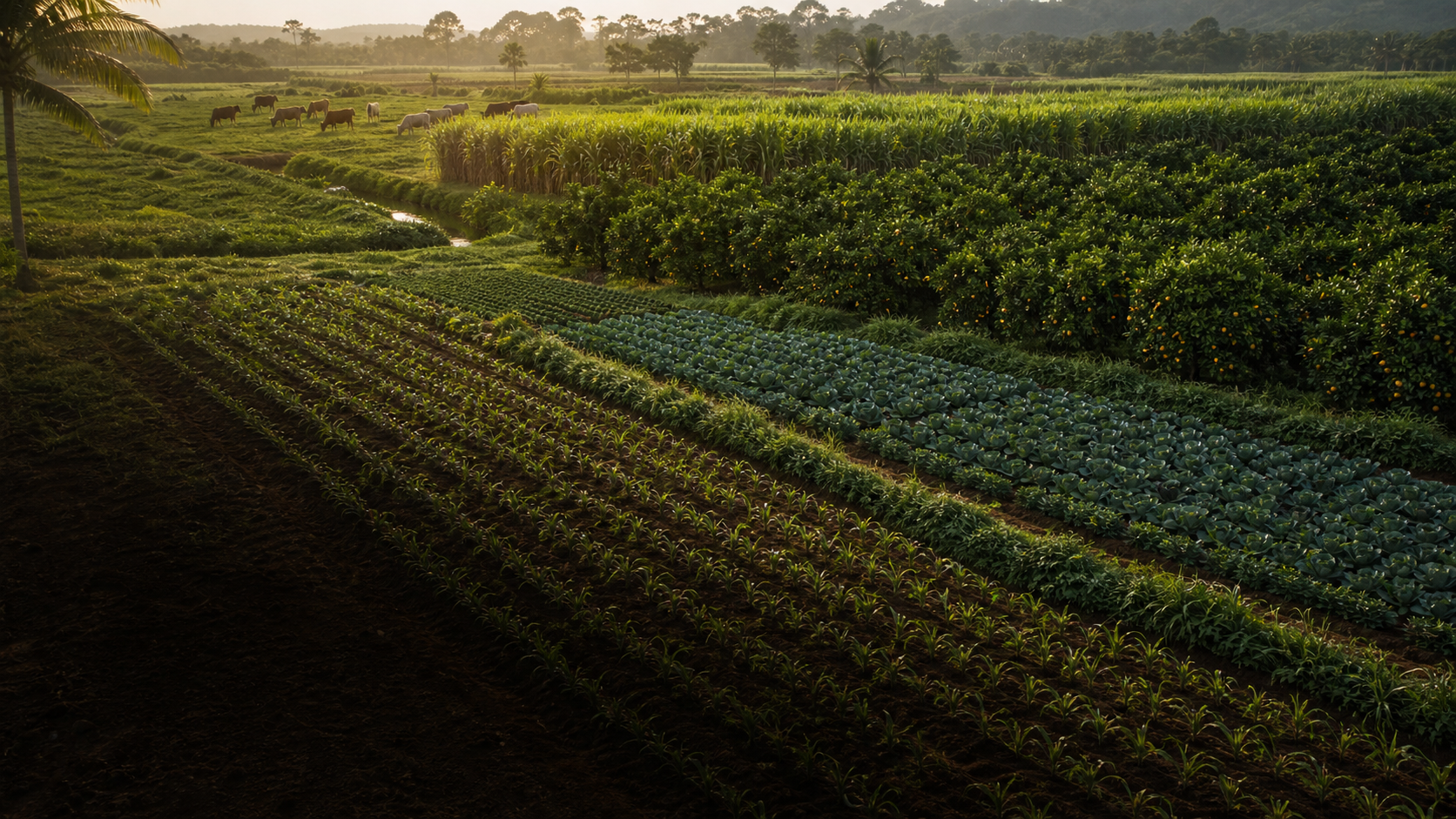
A connected landscape of row crops, vegetables, orchard, sugarcane, cattle pasture and wildlife habitat

One portfolio. Six very different production realities

The useful question is not which seed has the longest benefit list. It is which plant fits the crop, calendar, equipment and risk of the system around it.

Explore production systems
Context changes the answer

Design the cover or forage around the main enterprise

A six-week window between vegetables is not an orchard floor. A flooded pasture is not a drought-exposed one. A wildlife food plot is not a permanent forage.

Each production system creates its own non-negotiables: planting dates, traffic, residue, water, livestock access, pest pressure and harvest. The role of Tropical Seeds is to identify the biological function that can strengthen that system without creating a new operational risk.

01
Corn · Soy · Cotton · Rice

Row Crops

Repeated monoculture, rising nitrogen cost, exposed soil and selected nematodes can erode the resilience of broad-acre systems.

Fit a functional crop inside a narrow calendar

Design backward from the next planting. Species, biomass and termination must work with the planter, herbicide program and nutrient timing—not compete with them.

02
High-value rotations

Vegetable Production

Short cycles intensify nutrient demand, weed pressure and soilborne pest risk while leaving little margin for a slow or difficult-to-terminate cover.

Use the rotation window without adding production risk

Fast establishment and precise termination matter. Diagnose nematodes by species, check the next crop's planting interval and plan residue handling before seed is ordered.

03
Citrus · Coffee · Banana · Palms

Tree Crops & Orchards

Bare alleys expose soil to erosion and runoff, while the wrong groundcover can compete for water, interfere with harvest or create unwanted host habitat.

Keep the floor living without competing with the tree

Match persistence, shade tolerance, traffic and mowing height to the orchard. Manage a clear zone around young trunks and monitor moisture competition during establishment.

04
Monoculture break

Sugarcane

Long production cycles and heavy field traffic can increase compaction, nitrogen demand and loss of soil biological function.

Turn the renovation period into an active recovery phase

A fast warm-season legume can protect exposed ground, add biomass and contribute biologically fixed nitrogen between cane cycles. Termination and residue management should serve the next planting operation.

05
Grazing · Cut-and-carry · Hay · Silage

Livestock & Pasture

Degraded tropical pasture combines low groundcover, seasonal feed gaps, erosion and declining animal performance.

Select by water, shade and use—then manage for persistence

The portfolio separates drought, waterlogging, shade, intensive cutting and grazing needs. Establishment, residual height, rest and fertility determine whether genetic potential becomes usable forage.

06
Turkey · Deer · Waterfowl

Wildlife & Habitat

Supplemental food plots work only when the crop, target species, seasonal demand and surrounding habitat are planned together.

Build a dedicated plot around wildlife use and regulation

Chufa provides underground tubers for turkey and waterfowl; lablab provides warm-season browse. Plot size, establishment protection and lawful manipulation determine whether that food is available when wildlife needs it.

The questions that travel across production systems

Four checkpoints prevent a generic recommendation

Window

How many usable growing days exist?

Water

Is the dominant risk drought, flooding or competition?

Operations

How will the crop be planted, used and terminated?

Outcome

What change will justify repeating the practice?

Make it specific

Tell Terra what the farm produces—not only what it wants to plant

Add location, current crop or livestock system, equipment, water regime and the next critical operation.