
GrassPerennial / managed as annual coverWarm season

Ruziziensis

Urochloa ruziziensis

A deep-rooted tropical grass that blends well with Crotalaria in temporary rotational cover-crop systems, adding biomass while helping improve soil conditions before the next crop.
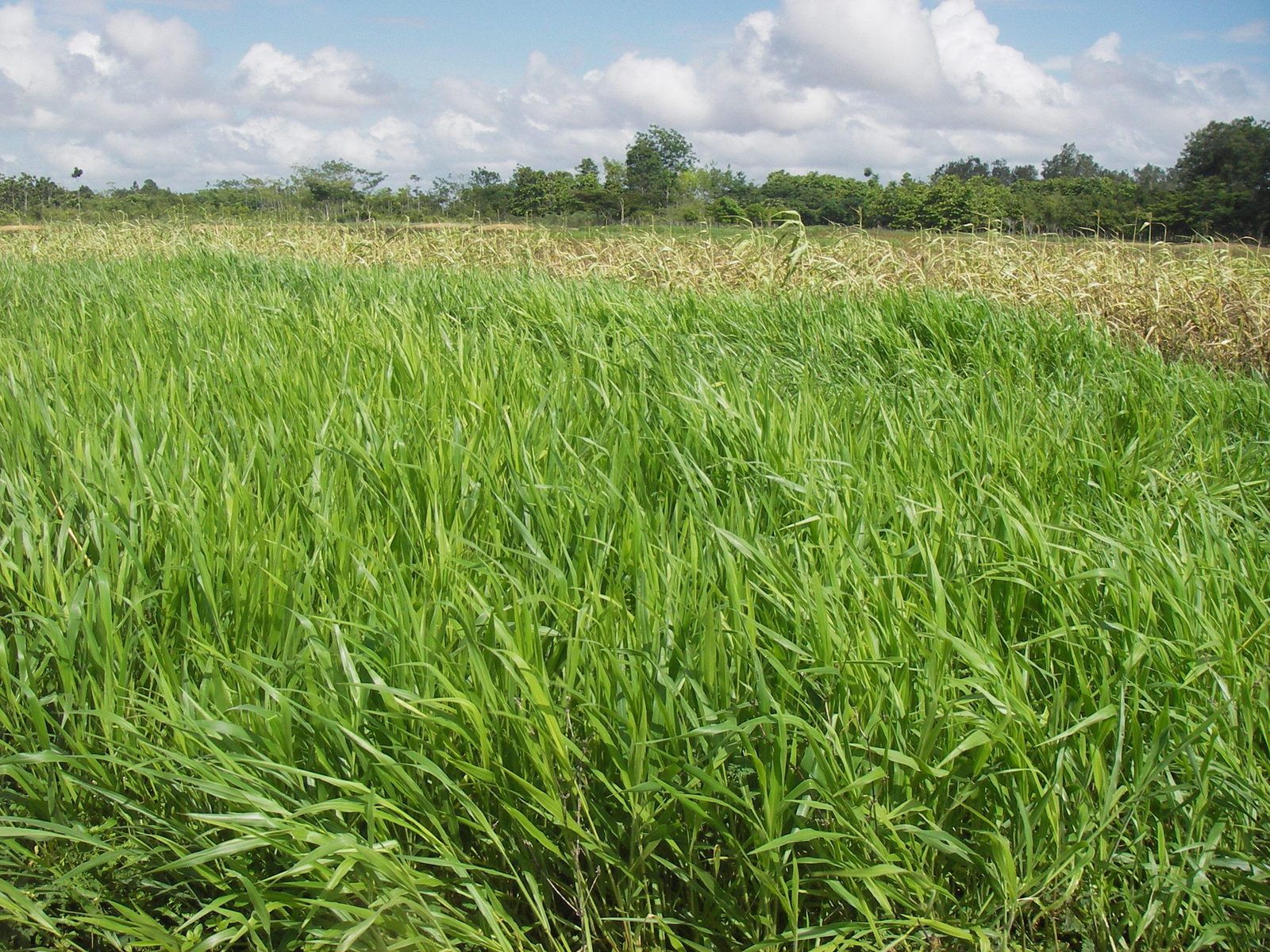
Ruziziensis field view
Technical variety profile
At a glance

The current technical file reports roots to 3 m, 12–20 t DM/ha/year, 10–14% crude protein and 55–60% digestibility.

Dry matter12–20 t/ha/year
Crude protein10–14%
Digestibility55–60%
Root depthUp to 3 m
Cover rate8–10 kg/ha
ICL mix rate4–6 kg/ha
01
Best fit

Where Ruziziensis belongs

Integrated crop–livestock rotationsDeep rooting and soil coverPasture, silage, hay and haylageOrchard alleys and selected nematode programs
#cover-crop#roots#pasture#nematodes#orchards
02
Why it performs

Three reasons to shortlist it

03
Technical data

Comparable specifications

Dry matter12–20 t/ha/yearTechnical reference
Crude protein10–14%Technical reference
Digestibility55–60%Technical reference
Root depthUp to 3 mTechnical reference
Cover rate8–10 kg/haTechnical reference
ICL mix rate4–6 kg/haTechnical reference
Growth habitDecumbent tropical grassTechnical reference
Planting depth2–4 cmTechnical reference
Pasture rate8–10 kg/haTechnical reference
Orchard rate10 kg/haTechnical reference
PalatabilityVery highSource description
Primary product documents

Download the technical sheet

Choose the language for a concise guide to key benefits, establishment, management, specifications and limitations.

View guides and supporting research
04
Establishment

Build the stand correctly

  1. 01Use 8–10 kg/ha for cover or pasture, 4–6 kg/ha in documented intercrop systems and 10 kg/ha in orchard lanes.
  2. 02Plant 2–4 cm deep into a prepared seedbed.
  3. 03Plan chemical or mechanical termination before planting the next crop.
05
Management

Turn potential into performance

  • Adjust grazing and cutting to retain cover and root reserves.
  • In row-crop rotations, coordinate termination, residue and planter setup.
  • Use species-specific diagnosis for nematode recommendations.
06
Limitations & safety

Know where it does not fit

  • Not suited to prolonged waterlogging, severe frost or arid sites without irrigation.
  • Susceptible to spittlebug pressure.
  • Host status varies by nematode species and cultivar; confirm the diagnosis and local evidence before using it in a rotation.
07
Technical resources

Guides and supporting research

Technical guide · Current edition

Urochloa ruziziensis

CSIRO · ILRI · Alliance of Bioversity International and CIAT

Open publication
Peer-reviewed article · 2023

Response of plants used in cover crop mixes to Meloidogyne enterolobii, M. incognita and Pratylenchus brachyurus

São Paulo State University (UNESP) · Pesquisa Agropecuária Tropical

Open publication
Peer-reviewed article · 2025

Host status of selected summer forage grasses to Meloidogyne javanica and M. incognita

Embrapa Temperate Agriculture · Tropical Plant Pathology

Open publication
Peer-reviewed article · 2015

Crop rotation and crop sequences for management of the reniform nematode in soybean production

Embrapa Western Agriculture · Ciência Rural

Open publication
Conference research paper · 2009

Desenvolvimento do sistema radicular de forrageiras e da soja em sistemas de integração lavoura-pecuária no arenito paranaense

Embrapa Soybean

Open publication
Peer-reviewed article · 2024

Subsurface Soil Compaction and its Effect on the Morphophysiological Characteristics of Maize Plants, Urochloa ruziziensis and Panicum maximum

University of Rio Verde · Brazilian Archives of Biology and Technology

Open publication
Peer-reviewed article · 2017

Sward structure and nutritive value of Urochloa ruziziensis under nitrogen and potassium fertilisation

Revista Caatinga

Open publication
Peer-reviewed article · 2014

Phytosociology of weeds in coexistence with cover crops

Federal University of Goiás · Revista Caatinga

Open publication
Peer-reviewed article · 2020

Implication of Urochloa spp. Intercropping and Conservation Agriculture on Soil Microbiological Quality and Yield of Tahiti Acid Lime in Long Term Orchard Experiment

Agronomic Institute of Campinas (IAC) · Agriculture

Open publication
View the complete Research Library
Field fit matters

Is Ruziziensis right for your system?

Share the location, field conditions, primary use and planting window before selecting a rate or product.

Request a recommendation
