

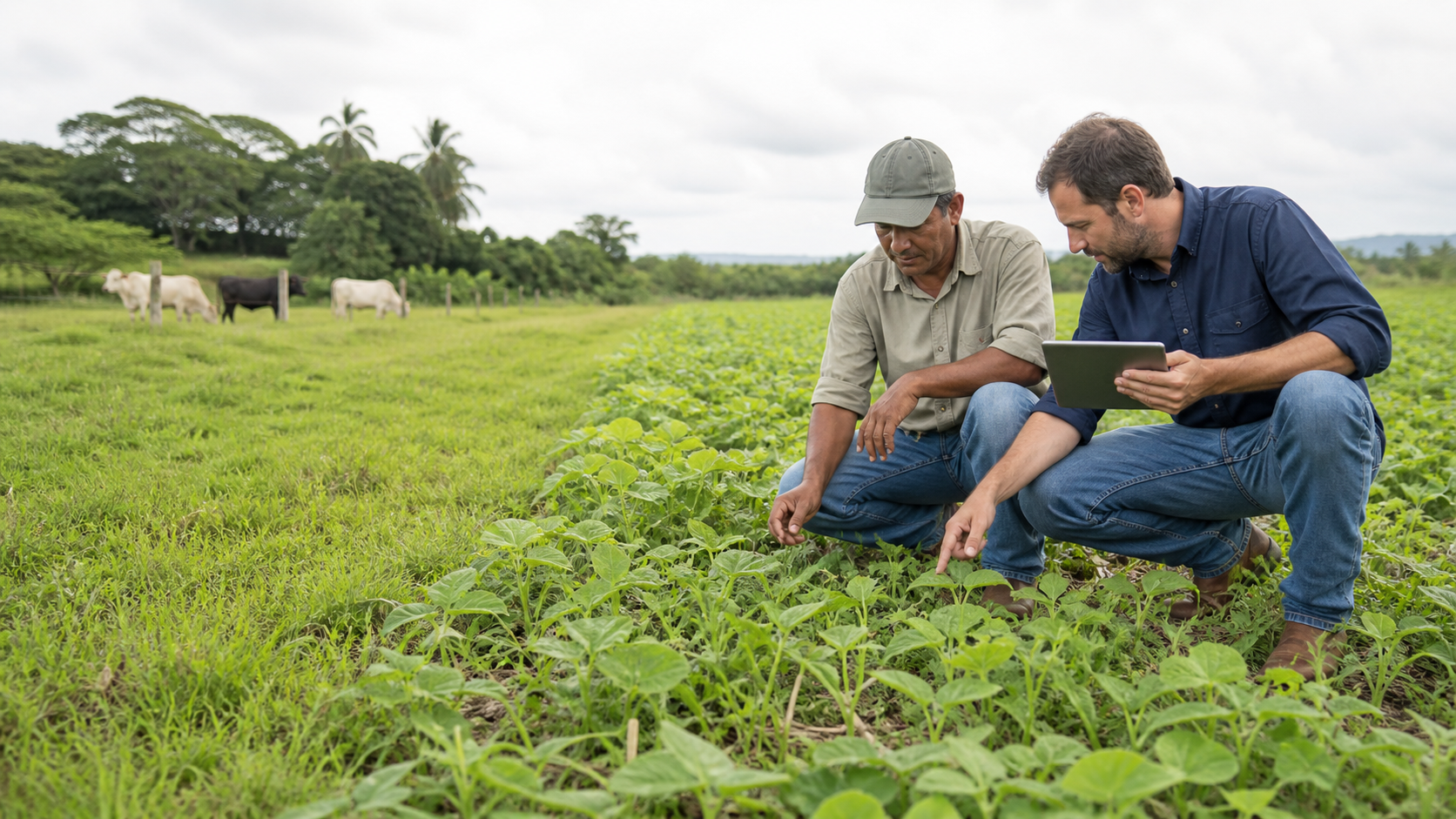
Clear answers before seed reaches the field
Starting guidance for variety selection, planting, management, ordering and technical support.
Common questions, field-aware answers
These answers provide a starting point. Product labels, local regulations and field conditions should guide the final decision.
Choosing a variety
How do I choose the right variety for my field?
Start with the production system and one primary objective, then narrow the options by climate, growing window, drainage, soil and intended use. The variety filters can build a shortlist, but local conditions should be confirmed before ordering.
Should I choose a grass, legume or sedge?
Plant group is a useful technical filter, not the first decision. Legumes can contribute biological nitrogen, grasses often build fibrous biomass or forage, and chufa is a sedge selected for tuber-producing wildlife plots. Begin with the job the planting must perform.
Can Tropical Seeds help design a blend?
Yes. A blend should combine compatible growth habits and management windows around a clear objective. Share the location, planting window, following crop or livestock use, water regime and equipment so the components and rates can be evaluated together.
Seed and planting
Why do seeding rates differ between documents or products?
Rates can change with seed coating, germination, purity, seed size, planting method, row spacing and intended use. Always confirm whether a recommendation refers to bulk product, raw seed or pure live seed, then follow the current label for the exact lot purchased.
What is the difference between coated and raw seed?
Coated seed includes seed plus coating material that may improve handling, placement or delivery of an approved treatment. Raw seed does not include that added material. Because the units are different, kilogram-for-kilogram rates should not be compared without checking the label basis.
How long can seed be stored?
Storage life depends on species, initial quality, moisture, temperature and packaging. Keep seed cool, dry, sealed and protected from pests. When seed has been stored beyond its current test period, retest germination before calculating a planting rate.
Do legume seeds need inoculant?
Many legumes perform best when compatible rhizobia are present. The required inoculant group varies by species, and previously inoculated or coated seed may have different handling rules. Check the product label and local recommendation before planting.
When is the best time to plant?
Planting time depends on soil temperature, frost risk, rainfall or irrigation, day length and the available window before grazing, harvest or termination. Each variety profile provides a starting point; a local recommendation should set the final date.
Management and safety
Can cover crops replace fertilizer or pesticides?
They may reduce a specific input in some systems, but only when the cover crop establishes well and the relevant function is measured. Cover crops are not universal substitutes for fertilizer, herbicides, nematicides or other crop-protection tools.
Can every Tropical Seeds variety be grazed or fed to livestock?
No. Feed suitability depends on the species, plant part, maturity, animal class and local regulations. Use only varieties explicitly supported for the intended animal use and follow product-specific harvest, grazing and inclusion guidance.
When should a cover crop be terminated?
Termination should be planned before planting. The right timing depends on the objective, stem maturity, residue, soil moisture, termination method and the planting interval required by the next crop.
Will sunn hemp control every nematode?
No. Response varies by nematode species, sunn hemp genotype, population and crop sequence. Diagnose the target nematode first and use the cover crop as one part of an integrated rotation and monitoring plan.
Is Tropical Seeds seed intended for human consumption?
No product should be consumed unless it is specifically labeled and supplied for food use. Seed sold for cover crops, forage, pasture or wildlife planting should be treated as planting seed only.
Ordering and support
Where can I buy Tropical Seeds products?
Tropical Seeds works through authorized regional distributors whenever local coverage is available. Products not carried by a distributor in your region may be purchased directly from Tropical Seeds when eligible. Use the Buy Seed page and include your delivery market so we can guide you to the right purchasing path.
Does Tropical Seeds supply customers outside the United States?
Tropical Seeds works across international markets, but availability, import requirements and shipping options differ by country. Contact the team with the destination, product, quantity and target planting date for confirmation.
How do I request a bulk quote?
Use the quote form and provide the delivery location, acreage or quantity, planting date, production system and varieties of interest. That information helps route the request and confirm the correct product form and rate basis.
Where can I find technical sheets and research?
Each variety page includes Technical Resources for product-specific material. The Research Library brings publications together and allows them to be filtered by variety, topic and evidence type.
Are the performance figures on the website guaranteed?
No. Agronomic results vary with environment, seed lot, establishment, fertility, management and measurement method. Published figures should be read with their location, season, basis and limitations.
Bring us the field context
Share the location, system, objective and planting window so the team can help narrow the options.