
LegumeAnnualCool season

Serradella

Ornithopus sativus

A cool-season annual legume for high-quality forage, nitrogen fixation and soil cover on acidic, sandy and low-fertility soils.
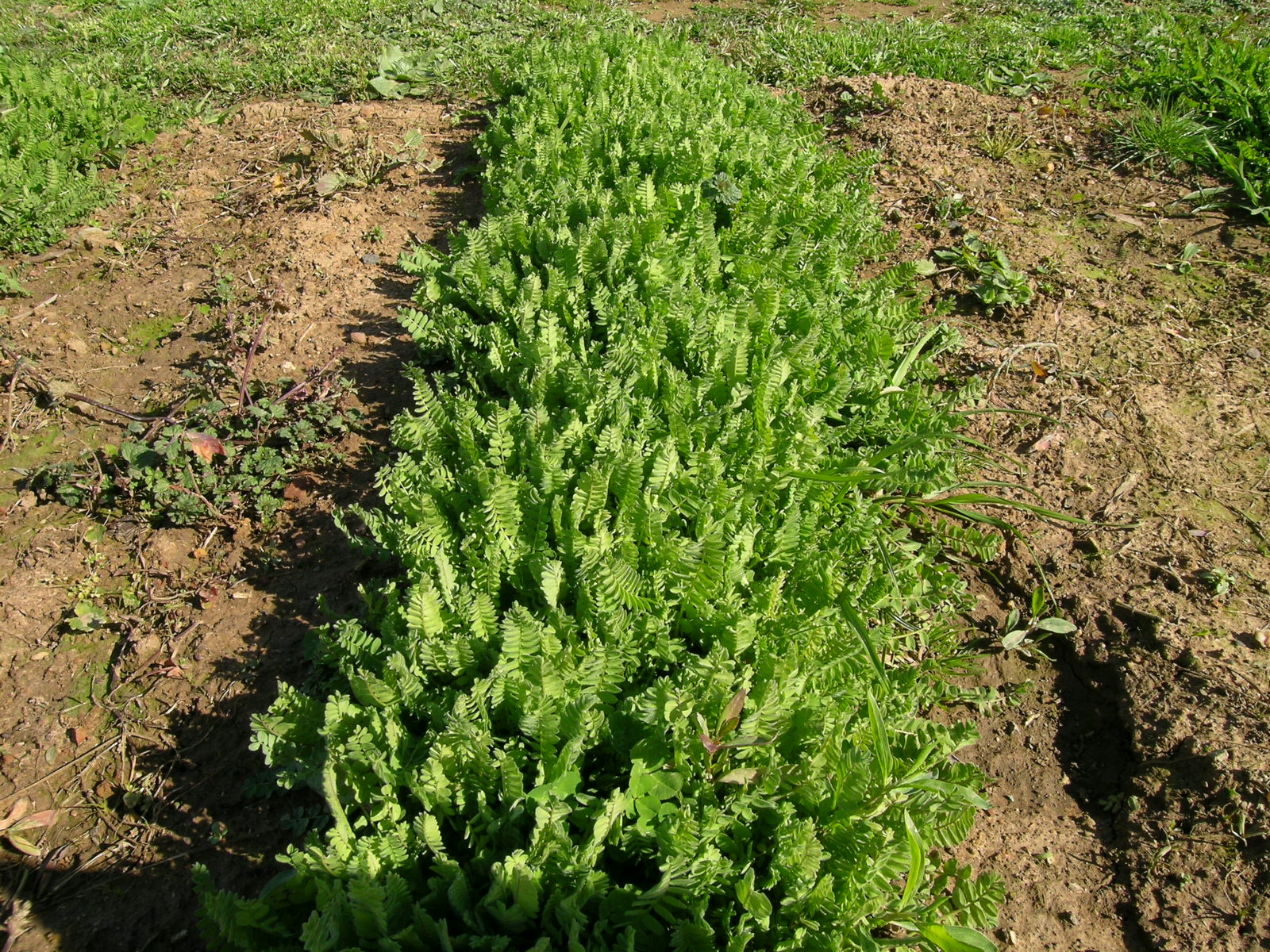
Serradella field view
Technical variety profile
At a glance

Pink or French serradella performs where many pasture legumes struggle, fitting autumn–spring pasture, cover-crop and crop–pasture rotations on light acidic soils while providing forage quality comparable with many subterranean clovers.

Commercial typePink / French serradella
Monoculture rate17–22 lb/ac20–25 kg/ha · supplied guide
Mixed-cover rate7–9 lb/ac8–10 kg/ha · supplied guide
Planting depth0.5 in / 10 mmShallow placement
Growing seasonAutumn–spring
Rainfall guide18+ in / 450+ mmSupplied fact-sheet minimum
Soil pH4–7Supplied fact-sheet range
Cold toleranceFrost tolerantSlower winter growth
Crude protein15–25%Supplier table at flowering; narrative also states 16–24%
Digestibility65–75%Dry-matter basis at flowering
01
Best fit

Where Serradella belongs

Acidic sandy and low-fertility pasture soilsCool-season forage and grazingRow-crop and pasture rotations needing nitrogen and coverMediterranean winter cover and selected orchard alleysSystems with spring dry spells after the crop is well established
#cool-season#pasture#nitrogen#acid-soils#soil-cover
02
Why it performs

Three reasons to shortlist it

03
Technical data

Comparable specifications

Commercial typePink / French serradellaTechnical reference
Monoculture rate17–22 lb/ac20–25 kg/ha · supplied guide
Mixed-cover rate7–9 lb/ac8–10 kg/ha · supplied guide
Planting depth0.5 in / 10 mmShallow placement
Growing seasonAutumn–springTechnical reference
Rainfall guide18+ in / 450+ mmSupplied fact-sheet minimum
Soil pH4–7Supplied fact-sheet range
Cold toleranceFrost tolerantSlower winter growth
Crude protein15–25%Supplier table at flowering; narrative also states 16–24%
Digestibility65–75%Dry-matter basis at flowering
Growth habitSpreading annual pasture legumeTechnical reference
SoilLight, well-drained acidic sands and loamsTechnical reference
Root systemDeep-rooted annualTechnical reference
Drought responseTolerant once established; moisture needed for germinationTechnical reference
WaterloggingAvoid heavy clay and prolonged waterloggingTechnical reference
Seed dormancySoft- or hard-seeded by cultivar and seed formTechnical reference
InoculationBradyrhizobium spp. · Group STechnical reference
Phosphorus guide9–18 lb/ac / 10–20 kg/haOnly where deficient
Other fertilityDiagnose potassium and sulfur before adjustmentTechnical reference
Primary usesPasture, forage, cover crop, green manureTechnical reference
LivestockCattle, sheep, goats and horsesTechnical reference
Forage formsGreen, dried, hay or silageTechnical reference
Primary product documents

Download the technical sheet

Choose the language for a concise guide to key benefits, establishment, management, specifications and limitations.

View guides and supporting research
04
Establishment

Build the stand correctly

  1. 01Sow in autumn or early spring into a clean seedbed, matching the window to regional rainfall and temperature.
  2. 02Identify whether the product is dehulled seed, hulled seed or pods before selecting the sowing rate.
  3. 03For the supplied fact-sheet program, use 17–22 lb/ac (20–25 kg/ha) in monoculture pasture or 7–9 lb/ac (8–10 kg/ha) in mixed cover crops.
  4. 04Place seed approximately 0.5 in / 10 mm deep; light harrowing can improve seed–soil contact.
  5. 05Maintain adequate soil moisture through germination and use compatible Bradyrhizobium spp. Group S inoculant.
  6. 06Verify herbicide history, especially simazine and other products with serradella restrictions.
05
Management

Turn potential into performance

  • Control weeds early because cool or dry conditions can slow establishment and increase competition.
  • Protect seedlings until the stand is anchored, then use rotational grazing to retain leaf area, groundcover and regrowth potential.
  • On phosphorus-deficient soils, the supplied guide reports 9–18 lb/ac (10–20 kg/ha) phosphorus for early growth; diagnose potassium and sulfur before adjustment.
  • If self-regeneration is an objective, allow adequate flowering and seed set before the final grazing period.
  • Match soft-seeded types to short-term forage and hard-seeded types to regeneration or crop-rotation strategies.
  • Monitor spring moisture, remove grazing pressure before a dry finish, and consider companion legumes or grasses where greater pasture diversity is desired.
06
Limitations & safety

Know where it does not fit

  • Winter growth slows in cold environments even though established plants tolerate frost.
  • Cultivars and seed forms differ materially in maturity, hard seed, regeneration and waterlogging response.
  • Serradella is not a universal fit for heavy, alkaline or persistently waterlogged soils.
  • Herbicide sensitivity and residue history must be checked before planting.
  • The supplied sheet reports moderate resistance to red-legged earth mites, blue-green aphids and cowpea aphids; susceptibility to lucerne fleas and native budworms; and general collar- and root-rot tolerance. Confirm these responses for the marketed cultivar and local pest complex.
07
Technical resources

Guides and supporting research

View the complete Research Library
Field fit matters

Is Serradella right for your system?

Share the location, field conditions, primary use and planting window before selecting a rate or product.

Request a recommendation
