
LegumeAnnual / short-lived perennialWarm season

Pigeon Pea

Cajanus cajan

A deep-rooted, drought-resilient tropical legume for pulse and vegetable production, forage, green manure, windbreaks and diversified row-crop or orchard systems.
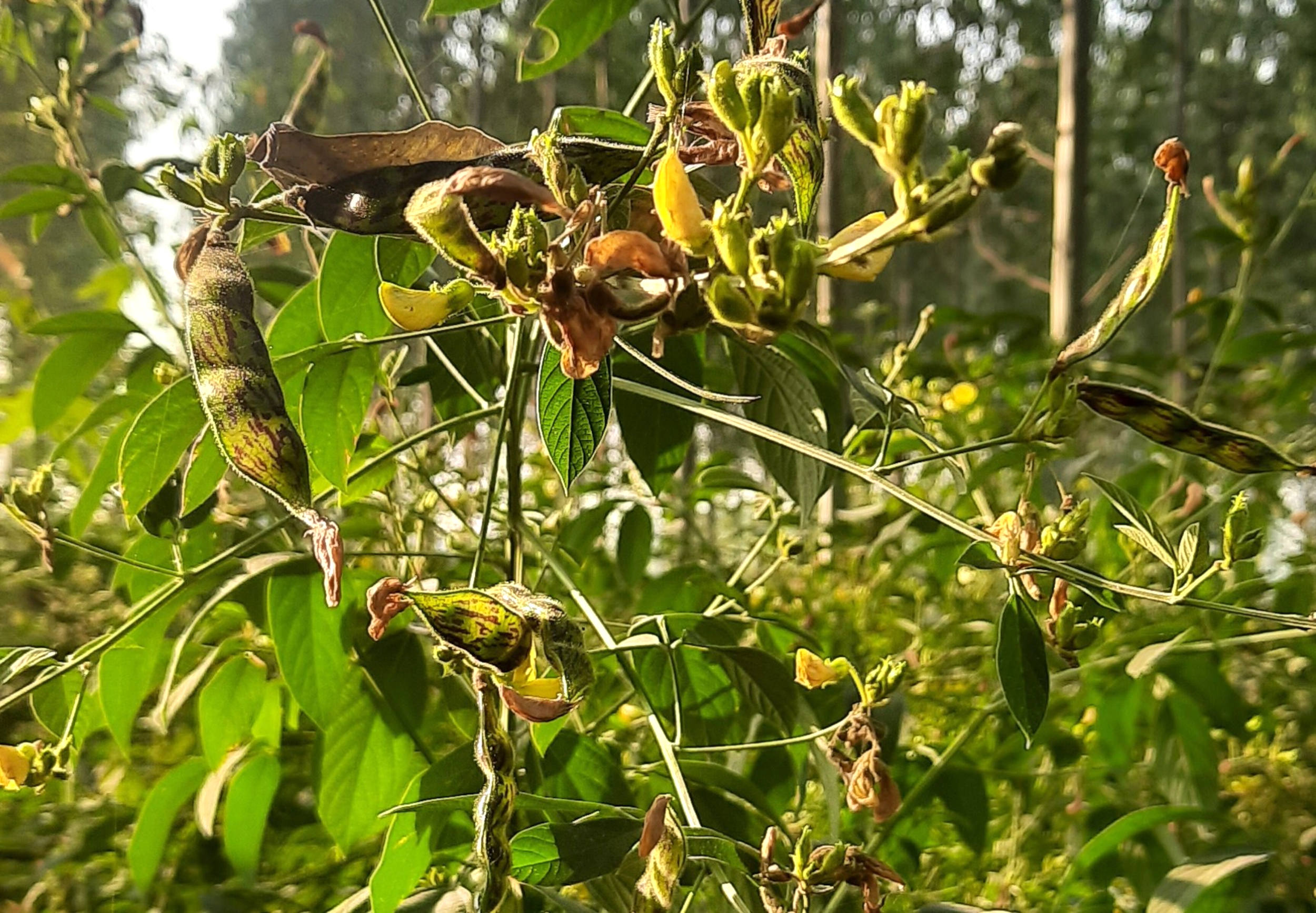
Pigeon Pea field view
Technical variety profile
At a glance

Pigeon pea combines a deep taproot, efficient nitrogen fixation and broad soil adaptation, but maturity, plant height and intended use vary substantially by cultivar.

Row-crop rate8–10 lb/acUSDA establishment guide
Cover / forage rate>20 kg/haDense stand guide
Planting depth≈4 cm / 1.5 in
Soil pH4.5–8.4
Best temperature18–30°C / 65–86°F
Seedling emergence2–3 weeks
01
Best fit

Where Pigeon Pea belongs

Drought-exposed tropical and subtropical row cropsPulse and fresh vegetable productionForage, browse and cut-and-carry systemsOrchard alleys, windbreaks and tropical agroforestryGreen manure, erosion control and soil restoration
#nitrogen#drought#forage#green-manure#pulse-crop
02
Why it performs

Three reasons to shortlist it

03
Technical data

Comparable specifications

Row-crop rate8–10 lb/acUSDA establishment guide
Cover / forage rate>20 kg/haDense stand guide
Planting depth≈4 cm / 1.5 inTechnical reference
Soil pH4.5–8.4Technical reference
Best temperature18–30°C / 65–86°FTechnical reference
Seedling emergence2–3 weeksTechnical reference
Growth habitErect, branching shrub legumeTechnical reference
Root systemDeep taprootTechnical reference
LightFull sunTechnical reference
Drought toleranceVery highTechnical reference
Waterlogging toleranceLow; free drainage requiredTechnical reference
Frost responseDefoliated or killed depending on severityTechnical reference
InoculationCowpea-group rhizobia where neededTechnical reference
Primary usesPulse, vegetable, forage, cover, green manureTechnical reference
Structural usesWindbreak, hedge and alley cropTechnical reference
Primary product documents

Download the technical sheet

Choose the language for a concise guide to key benefits, establishment, management, specifications and limitations.

View guides and supporting research
04
Establishment

Build the stand correctly

  1. 01Plant in full sun when soil temperature is at least 64°F / 18°C and frost risk has passed.
  2. 02Drill into a clean, well-prepared seedbed about 4 cm deep; adjust spacing and rate to grain, forage or cover-crop use.
  3. 03Control weeds for the first six weeks because early shoot growth is slow while the taproot develops.
  4. 04Use cowpea-group inoculant where effective rhizobia are absent or uncertain.
05
Management

Turn potential into performance

  • Choose maturity class deliberately: short-duration and tall, photoperiod-sensitive types occupy very different calendars.
  • For forage, use at pre-flowering or as the first pods begin to develop, according to cultivar and feed plan.
  • Cut tall forage types high enough to retain regrowth points; avoid continuous heavy grazing and brittle-branch damage.
  • In orchards or intercrops, manage height, competition, access and harvest timing as separate design constraints.
06
Limitations & safety

Know where it does not fit

  • Pigeon pea does not tolerate waterlogged soil and is susceptible to frost and fire.
  • Cultivars differ greatly in height, flowering date, day-length response, grain type and forage quality.
  • Seedlings require early weed control, while mature branches can break under heavy grazing.
  • Fusarium wilt, sterility mosaic disease, pod insects and storage weevils can be important by region.
07
Technical resources

Guides and supporting research

Technical guide · 2017

Cover Crop Options for Hot and Humid Areas

ATTRA Sustainable Agriculture · NCAT

Download from publisher
Technical guide · Current edition

Cajanus cajan

CSIRO · ILRI · Alliance of Bioversity International and CIAT

Open publication
View the complete Research Library
Field fit matters

Is Pigeon Pea right for your system?

Share the location, field conditions, primary use and planting window before selecting a rate or product.

Request a recommendation
